What features make DJ Mixer Express best-in-class DJ software?

AutoMix mode

AutoMix Feature

One-click, it will automatically mix the current list with seamless DJ-style transitions. Advanced auto-mixing including Mix-In/Mix-Out (Cue In/Out) points.

Video Mixing Software

Mix Video & Karaoke

Mix not only audio tracks, but also video (including scratch, reverse, pitch, break on video) and karaoke that takes your mix sessions to the highest level.

Visualize Waveforms

Visualize Waveforms

The visual waveforms graphics (both zoomable and full song) are generated in real-time based on the parameters (such as beats, tempo, frequency).

Beat Looping

Loops & Cues

Instantly loop a 1, 2, 4, 8 beat segment with a click of a button. seamless beat-aware loop and cue-points functions let you easily remix tracks on the fly.

Output Video Mixes

External Display

Output full-screen video mixes includes video transitions and FX to external devices (TV, monitor or projector) while maintaining video mix preview interface on your PC monitor.

Sync

Next Generation Sync:

Instantly sync two tracks. Track BPM, beat-grids, and key are automatically detected on import and used by the powerful sync engine for beat-matched mixes.

Mix iTunes

iTunes Integration

Seamless iTunes integration gives you instant access to all your playlists and music from iTunes, automatically ready to go for your next live DJ performance.

Vinyl

Vinyl Simulation

You can reverse play, pitch, scratch, bend, spin, brake, mute, fine-tune cue-points, etc the song just like with a regular vinyl. DJ Mixer Express emulates perfectly.

Audio Effects

Audio Effects

Apply different effects to your mixes, includes popular effects like Flanger, Echo, Robot Delay, Reverb, Cutoff, Reverse, Tremolo, Beat Waw, Bit Crusher, AutoPan.

KeyLock

KeyLock

Pitch fader with Keylock (master-tempo) function. when enabled, adjusting the pitch of a song does not change the tone of the track.

Pitch

Pitch & Tempo Adjustment

Increases or decreases the tempo (speed); you can temporarily speed up or slow down the tempo by momentarily right clicking on the slider.

Equalizer

3-Band Equalizer

3 equalizer knobs is available for each deck. The low, middle and high spectrum of frequencies can be modified within -14 dB to +14 dB range.

Automatic Gain

Perceptual Gain Control

Perceptual automatic gain (volume control) feature matches the gain levels between decks, so your mixes always maintain a consistent volume.

pre-listen

Song Preview

Using the preview (pre-listen) function, you can quickly and easily test whether the selected title fits to the current song and prepare the next song.

Record Your Mixes

Record your Mixes

Record your live mixes to MP3, WAV (Windows) or AIFF (Mac) formats in realtime. great for share it with the rest of the world.

DJ Mixer Express Screenshots

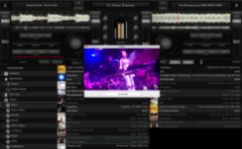
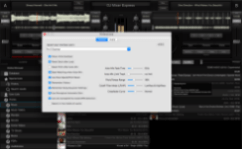
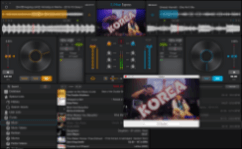
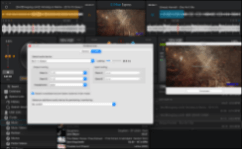
Screenshot Skin  General Preferences  Screenshot New Skin  Audio Preferences

Toon Shader Mmd ✦ Instant & Official

Light is divided into distinct bands: "Bright," "Base," and "Shadow." The transition between light and dark is a sharp line, not a blur. This mimics the limited color palette of traditional 2D animation.

Remember: Great cel shading is not about realism; it is about abstraction . It is about deciding where the light doesn't go as much as where it does. By controlling shadow steps, normal vectors, and rim lighting, you can make MMD produce images indistinguishable from hand-drawn animation. toon shader mmd

If you want your MMD animations to look like a frame ripped directly from a Kyoto Animation series or a high-budget anime OP (opening sequence), you need to master toon shading. This article will explain what a toon shader is, why standard MMD lighting falls short, and how to use advanced shaders like and PowerShader to achieve that perfect cel-shaded aesthetic. Part 1: What is a "Toon Shader" in the Context of MMD? In computer graphics, a "shader" is a program that dictates how light interacts with a 3D model's surface. A Toon Shader (or Cel Shader) simplifies lighting into harsh steps rather than smooth gradients. Light is divided into distinct bands: "Bright," "Base,"

Recommended by…


Ready to start make your own mixes?