sexy sait photo iranian hot

Sexy Sait Photo Iranian Hot 【1080p 2027】

This article delves deep into how SAIT Photo is reshaping narrative love stories, challenging traditional norms, and providing a new vocabulary for Iranian couples, directors, and artists to articulate their most intimate connections. To understand the impact of SAIT Photo on Iranian relationships, one must first decode its visual grammar. Unlike Western romantic photography, which often celebrates overt joy, bright smiles, and physical contact, the classic Iranian SAIT Photo is built on restraint .

So the next time you scroll past a dark, blurry photo of two people not-quite-touching on a Tehran rooftop, stop. Look closer. You are not seeing a photograph. You are witnessing a romantic storyline that risked everything to exist. Are you an artist or writer inspired by SAIT Photo aesthetics? Share your own Iranian relationship storylines in the comments below, or tag your work with #SaitRomance. For more deep dives into global visual cultures, subscribe to our newsletter. sexy sait photo iranian hot

For artists, couples, and dreamers in Iran and beyond, SAIT Photo is not just an aesthetic. It is a methodology of hope. It proves that even under the heaviest censorship, the human heart will find a frame—grainy, shadowed, and utterly, devastatingly beautiful. This article delves deep into how SAIT Photo

This has led to a fascinating backlash and accommodation. In 2022, the Iranian Ministry of Culture attempted to ban "melancholic romantic imagery" from social media, labeling it "Western decadence." The result? The hashtag #SaitPhoto exploded in popularity, with artists layering over their photos with QR codes linking to underground zines. The regime cannot win against a single, viral frame. Perhaps the most significant contribution of SAIT Photo to Iranian relationships is the reclamation of the female gaze. Historically, Iranian cinema (pre- and post-revolution) often framed women as objects of look —the camera lingered on her eyes, her hairline, her hands. In SAIT Photo, women are increasingly the creators, not just the subjects. So the next time you scroll past a

While "SAIT Photo" (often stylized as Sait Photo or Sut Photo ) originally referred to a specific genre of high-contrast, cinematic still photography popularized on Iranian social media platforms like Telegram and Instagram, it has evolved into a cultural shorthand. Today, represents a distinctive aesthetic: grainy, moody, often shot in blue or sepia tones, capturing a single, stolen moment between two people. But beyond the filters and the lighting, this genre has become the primary vehicle for exploring modern Iranian romance—a romance that exists in the liminal space between public prohibition and private desire.
This article delves deep into how SAIT Photo is reshaping narrative love stories, challenging traditional norms, and providing a new vocabulary for Iranian couples, directors, and artists to articulate their most intimate connections. To understand the impact of SAIT Photo on Iranian relationships, one must first decode its visual grammar. Unlike Western romantic photography, which often celebrates overt joy, bright smiles, and physical contact, the classic Iranian SAIT Photo is built on restraint .

So the next time you scroll past a dark, blurry photo of two people not-quite-touching on a Tehran rooftop, stop. Look closer. You are not seeing a photograph. You are witnessing a romantic storyline that risked everything to exist. Are you an artist or writer inspired by SAIT Photo aesthetics? Share your own Iranian relationship storylines in the comments below, or tag your work with #SaitRomance. For more deep dives into global visual cultures, subscribe to our newsletter.

For artists, couples, and dreamers in Iran and beyond, SAIT Photo is not just an aesthetic. It is a methodology of hope. It proves that even under the heaviest censorship, the human heart will find a frame—grainy, shadowed, and utterly, devastatingly beautiful.

This has led to a fascinating backlash and accommodation. In 2022, the Iranian Ministry of Culture attempted to ban "melancholic romantic imagery" from social media, labeling it "Western decadence." The result? The hashtag #SaitPhoto exploded in popularity, with artists layering over their photos with QR codes linking to underground zines. The regime cannot win against a single, viral frame. Perhaps the most significant contribution of SAIT Photo to Iranian relationships is the reclamation of the female gaze. Historically, Iranian cinema (pre- and post-revolution) often framed women as objects of look —the camera lingered on her eyes, her hairline, her hands. In SAIT Photo, women are increasingly the creators, not just the subjects.

While "SAIT Photo" (often stylized as Sait Photo or Sut Photo ) originally referred to a specific genre of high-contrast, cinematic still photography popularized on Iranian social media platforms like Telegram and Instagram, it has evolved into a cultural shorthand. Today, represents a distinctive aesthetic: grainy, moody, often shot in blue or sepia tones, capturing a single, stolen moment between two people. But beyond the filters and the lighting, this genre has become the primary vehicle for exploring modern Iranian romance—a romance that exists in the liminal space between public prohibition and private desire.

Weitere Modelle
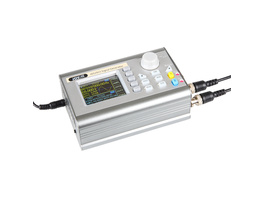
Joy-IT 2-Kanal-Signalgenerator und Frequenzzähler JT-JDS2915
Artikel-Nr. 251094
Der kompakte und mobile Signalgenerator gibt Sinus-, Rechteck-, Dreieck- und Arbiträrsignale im Frequenzbereich bis 15 MHz auf zwei getrennt programmierbaren Kanälen aus und kann als Frequenzzähler bis 100 MHz eingesetzt werden.
sofort versandfertig - Lieferzeit: 1-2 Werktage²
109,00 €
inkl. MwSt.Informationen zu Versandkosten