
The home of
Pics Of Cartoon: Shemale Better
We are an award winning hospital based in the heart of London, with an outstanding reputation based on clinical excellence and quality medical care.
Read More


The home of
We are an award winning hospital based in the heart of London, with an outstanding reputation based on clinical excellence and quality medical care.
Read More

Whatever your concerns our handpicked selection of world class plastic surgeons, dermatologists, gynaecologists and ENT surgeons are here to provide the right medical assistance.
Read More

The Cadogan Clinic is a leading private healthcare facility located in London. We are renowned for providing a wide range of medical treatments, including plastic surgery, dermatology, gynaecology, ophthalmology, podiatry and injectable procedures.
We are based on Sloane Street in London's prestigious Chelsea district.
We are known for our high standards of care and our team of highly skilled healthcare professionals. We have a spotless 20 year track record of success.

We were founded in 2004 by world renowned plastic surgeon Mr Bryan Mayou, best known for his pioneering work in the area of liposuction, lasers and microvascular surgery. Today we lead the field in regenerative medicine and continue to collaborate with the leading pioneers in our field.
About Us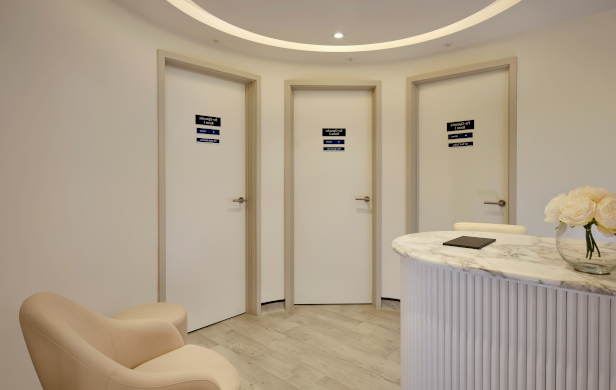

2025
Best Clinic London - Highly Commended
Aesthetics Awards
2024
Clinic of the Year 2024
Aesthetics Medicine Awards
2024
London Clinic of the Year 2024
Aesthetics Medicine Awards
2024
Best Clinic London
Aesthetics Awards
2023
Best Clinic London - Highly Commended
Aesthetics Journal
2021
Best Clinic - Highly Commended
Aesthetics Awards
2021
Hall of Fame Award
My Face My Body Awards
2020
Best Clinic Award
My Face My Body Awards
2019
Best Clinic Award
My Face My Body Awards
2019
Best Private Hospital in the UK – Finalist
LaingBuisson Awards
2019
Best Private Hospital in London - Winner
Healthcare and Pharmaceutical Awards
2018
Best Clinic in London - Runner up
Aesthetics Awards
2018
Best Private Healthcare Company - Winner
Chelsea Monthly
2018
Best Clinic - Highly Commended
at MyFaceMyBody
2018
Best Cosmetic Surgery Practice - Runner-up
My Face My Body Awards
All of our treatments take place at our beautiful boutique premises in Chelsea. We have six consulting rooms and five operating rooms, as well as a dedicated pre and post-operative suite, and a full team of specialist nursing staff.
Featured Article

We were founded in 2004 by world renown plastic surgeon Mr Bryan Mayou, best known for his pioneering work in the area of liposuction, lasers and microvascular surgery. We continue to collaborate with pioneers in our field.
For decades, the LGBTQ+ movement has been symbolized by the rainbow flag—a vibrant spectrum representing diversity, unity, and pride. Yet, within that spectrum, specific bands of color carry distinct histories, struggles, and triumphs. Among the most dynamic and historically significant of these is the transgender community. To discuss "transgender community and LGBTQ culture" is not to discuss two separate entities; it is to explore the very engine that has driven queer liberation forward, often from the margins to the center.
Transgender activists did not simply join the LGBTQ movement; they helped launch it. The culture of radical acceptance, anti-assimilation, and direct action that defines much of LGBTQ culture today was forged in the crucible of trans resistance. Part II: Defining the Relationship — How Trans Identity Enriches LGBTQ Culture While LGB (Lesbian, Gay, Bisexual) identities often center on sexual orientation, transgender identity centers on gender identity —one’s internal sense of self as male, female, a blend of both, or neither. This distinction creates a unique dynamic. 1. Challenging the Binary LGBTQ culture, especially in its early organizing days, often relied on clear definitions (gay, straight, lesbian). The transgender community, particularly non-binary and genderqueer individuals, forces a radical expansion of that framework. By existing, trans people challenge the very notion that gender is a simple, biological given. This has reshaped LGBTQ culture into a space that increasingly celebrates fluidity, ambiguity, and personal definition over rigid categorization. 2. The Concept of "Found Family" Both transgender individuals and broader LGBTQ culture have historically faced rejection from biological families of origin. Out of this shared trauma emerged the concept of found family or chosen family . However, for trans people—who may face higher rates of family rejection—this concept is not just cultural; it is survival. LGBTQ culture has adopted this as a core tenet: the idea that love, loyalty, and belonging are actions, not blood ties. 3. Intersectionality in Action Kimberlé Crenshaw’s theory of intersectionality lives vividly within the intersection of transgender identity and LGBTQ culture. A wealthy white gay man and a homeless Black trans woman share a pride flag, but their experiences of oppression differ drastically. The transgender community has pushed LGBTQ culture to stop being a single-issue movement and start recognizing how race, class, disability, and immigration status intersect with gender identity. Part III: The Vocabulary of Visibility — Language as a Cultural Bridge One of the most profound contributions of the transgender community to mainstream LGBTQ culture is the evolution of language . Terms that were once academic— cisgender (someone whose gender identity aligns with their sex assigned at birth), non-binary , gender dysphoria , deadnaming (using a trans person’s former name)—are now common parlance. pics of cartoon shemale better
We are seeing the rise of —where a gay man, a bisexual woman, and a non-binary trans person fight together not just for "gay rights" or "trans rights," but for the right of all people to self-determine their lives, loves, and bodies. Conclusion: The Rainbow Needs Every Color To separate the transgender community from LGBTQ culture would be like removing indigo from the rainbow—the spectrum would still exist, but it would be thinner, dimmer, and incomplete. The trans community has paid the down payment on queer liberation with blood, activism, and art. They have taught LGBTQ culture that freedom isn't just about who you love, but about who you are . For decades, the LGBTQ+ movement has been symbolized
In recent years, visibility for transgender individuals has skyrocketed. From film and television to political activism and healthcare advocacy, the "T" in LGBTQ+ is no longer silent. But understanding this community requires looking beyond headlines about bathroom bills or red-carpet moments. It requires a deep dive into the symbiotic relationship between transgender identity and the broader LGBTQ culture, the historical milestones, the unique challenges, and the vibrant future both communities are building together. The modern LGBTQ rights movement did not begin with corporate pride parades or legal same-sex marriage. It began with riots. Specifically, the Stonewall Inn uprising of June 28, 1969. While mainstream history often highlights gay men, recent scholarship confirms that transgender women, particularly trans women of color, were on the front lines. To discuss "transgender community and LGBTQ culture" is
As we move forward, the only path is one of radical inclusion. When trans people are safe, celebrated, and free, the entire LGBTQ community—and indeed, society at large—becomes more authentic. The fight for transgender dignity is not a niche cause; it is the cutting edge of the human rights movement. And that is a culture worth building. If you or someone you know needs support, resources like The Trevor Project (866-488-7386) and the Trans Lifeline (877-565-8860) provide 24/7 crisis intervention for transgender and LGBTQ individuals.


2024
Aesthetic Medicine 2024
UK Clinic of the Year

2024
Aesthetic Awards
Best Clinic, London
2024
Aesthetic Medicine
Best Clinic, London
2023
Aesthetic Awards
Highly Commended
2021
Aesthetic Awards
Highly Commended
2021
MyFaceMyBody
Best Plastic Surgery Clinic, UK
2020
MyFaceMyBody Awards
Best Plastic Surgery Clinic, UK
2019
MyFaceMyBody Awards
Best Plastic Surgery Clinic, UK